MAPlab Circuit Brain Vector Logo
MAPlab

Memory, Action & Perception Laboratory

Research Program · Queen's University

Mapping Whole-Brain Dynamics Behind Skilled Human Action

Current research in MAPlab bridges functional and structural neuroimaging, low-dimensional neural manifold modelling, and robotic psychophysics to uncover how distributed brain networks interact as humans learn, remember, perceive, and decide.

Interacting Whole-Brain Networks
SMN FPN/AMN DMN Visual Cerebellar
Drag to rotate 3D interacting connectome
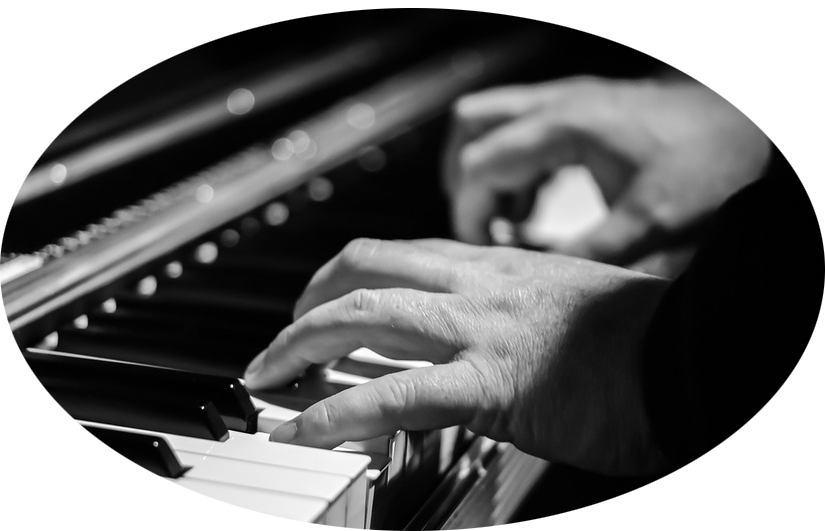
Skilled piano performance representing complex human motor skill learning
01 Memory & Learning

Neural Mechanisms of Learning

Humans are capable of learning a seemingly infinite number of skills and complex behaviours. Yet, we still have an incomplete understanding of the changes in whole-brain neural activity patterns that accompany such learning, and how those changes relate to an individual's capacity to learn. Work in MAPlab tracks the low-dimensional manifold dynamics of neural activity over the course of task-based adaptation and reinforcement learning—revealing why certain skills are acquired rapidly, consolidated overnight, and transferred seamlessly to untrained limbs or novel contexts.
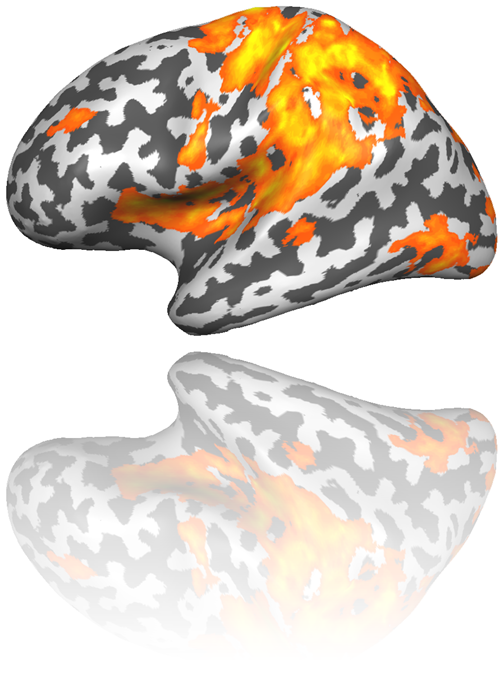
Right-hemisphere cortical surface functional mapping of action and memory networks
02 Working Memory & Motor Recall

Neural Links Between Memory and Action

Working memory refers to the active maintenance and manipulation of behaviourally relevant information over short temporal intervals. Whereas classic cognitive studies have focused on recalling sensory stimuli for perceptual reports, everyday working memory is continually deployed to consider, sequence, plan, and guide eye and arm movements. Our research investigates how information held in working memory and transmodal networks—including the Default Mode Network and medial temporal lobe—is flexibly reinstated to guide motor planning and accelerate motor recall.

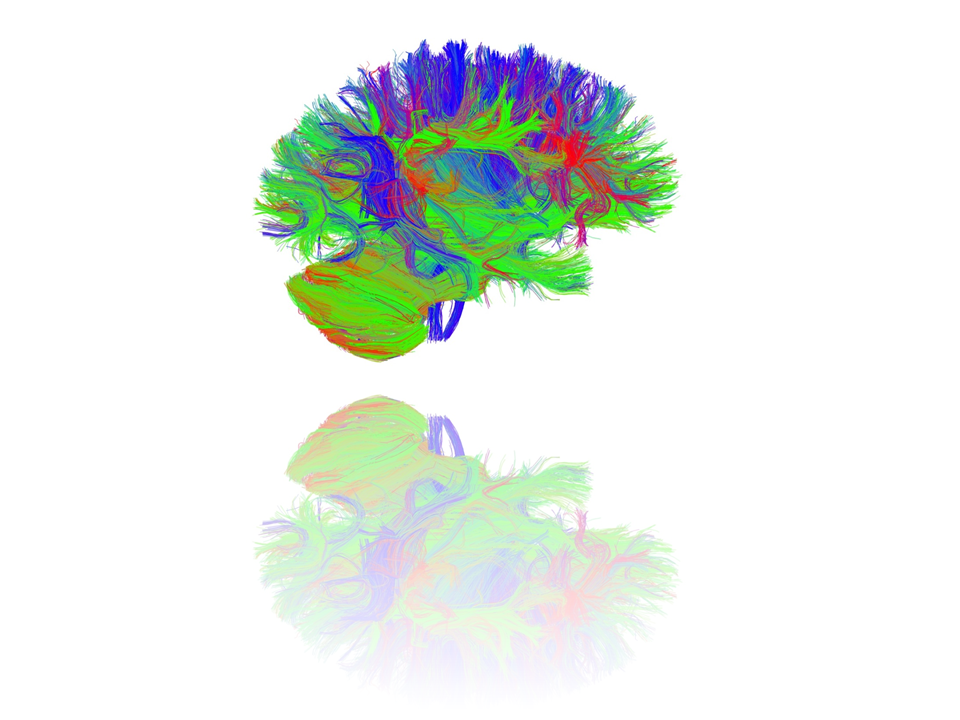
Diffusion tensor tractography reflection illustrating structural white-matter brain connectivity
03 Connectomics & Cortical Manifolds

Cognitive Operations in Functional and Structural Brain Networks

Complex cognitive operations and skilled behaviours do not emerge from isolated brain regions acting alone, but from distributed, dynamically coordinated whole-brain networks. Combining functional MRI, diffusion tractography, Riemannian covariance centering, and manifold learning, several lines of work in the lab examine how flexible interactions across cortical, cerebellar, and striatal circuits support cognition—and how focal or network-level disruptions (such as stroke or temporal lobe epilepsy) alter behavioural recovery.

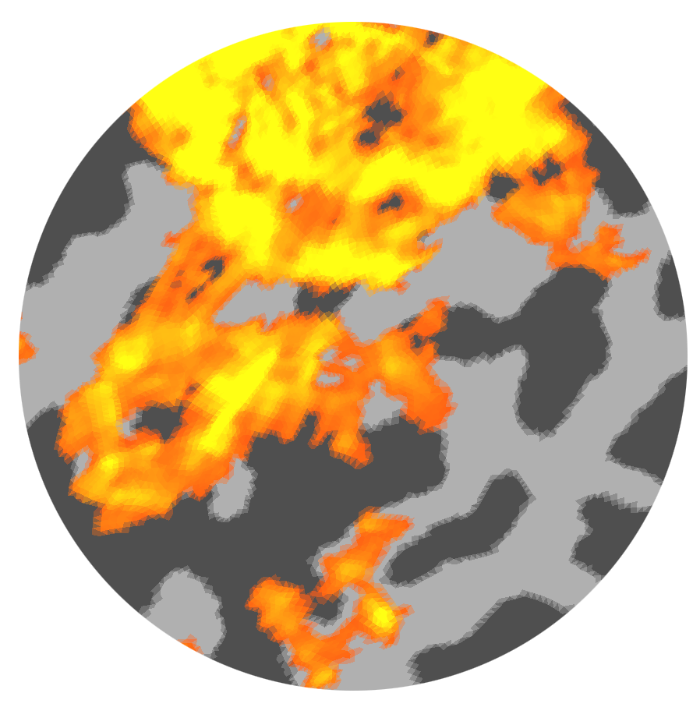
Circular cortical flatmap showing retinotopic and sensory cortical activity
04 Top-Down Sensory Tuning

Motor-Related Modulations of Early Sensory Cortex

Although textbook neuroscience has traditionally emphasized a feedforward, sensory-to-motor hierarchy, primary sensory areas—including early visual (V1–V3), primary auditory, and primary somatosensory (S1) cortex—receive extensive feedback projections from higher-order motor and association cortices. Using delayed-movement fMRI decoding and electrophysiology, we show how movement preparation selectively tunes early sensory representations before a movement is ever launched, readying sensory cortex for the anticipated consequences of action.

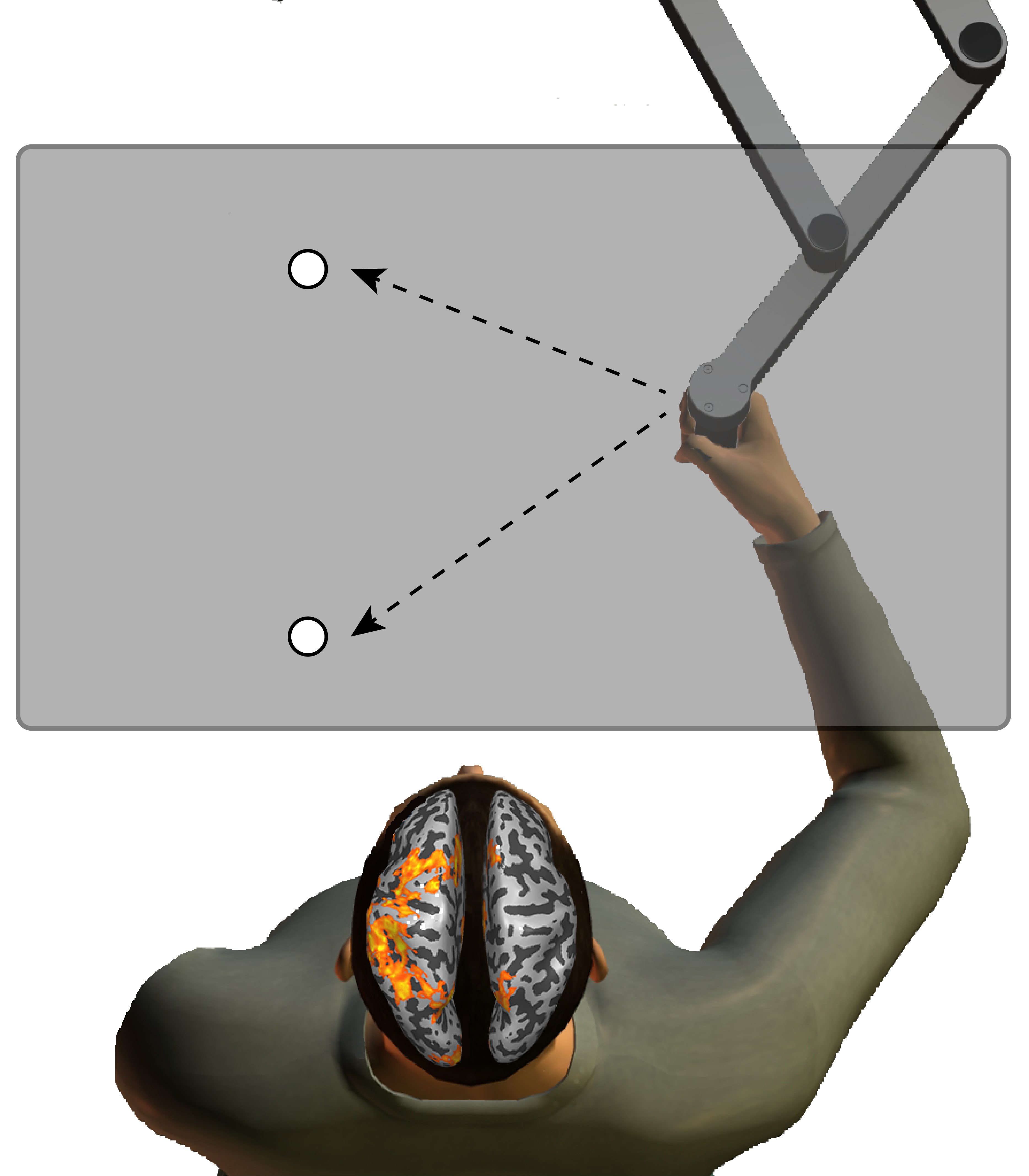
Participant holding robotic manipulandum while deciding between two competing reach targets
05 Competing Action Policies

Integrated Mechanisms of Decision-Making and Action Planning

Understanding how the brain represents and chooses among competing action options in real time sits at the heart of both decision neuroscience and motor control—two fields that historically evolved in isolation. Using rapid 'go-before-you-know' reaching paradigms, robotic force perturbations, and computational optimal-feedback models, we explore how biomechanical effort, obstacles, uncertainty, and expected future skill shape decisions between competing goals.

Neural pathways connecting ventral occipitotemporal and dorsal parietofrontal visual streams
06 Stream Cross-Talk

Interactions Between Dorsal and Ventral Visual Pathways

Influential models of primate vision distinguish a ventral pathway in occipitotemporal cortex (OTC) supporting object recognition from a dorsal pathway in parietofrontal cortex supporting action control. Everyday tool use and object manipulation, however, demand continuous communication between both streams—combining learned object weight, texture, and function with precision grip kinematics. Our lab maps where and when ventral-dorsal cross-talk occurs in the human brain and how causal TMS perturbations across each stream affect goal-directed behaviour.

Translational Neuroscience

Decoding the Healthy Mind in Motion to Guide Clinical Recovery

Beyond fundamental systems neuroscience, our work characterizes network-level reorganization in stroke recovery and cognitive phenotyping in temporal lobe epilepsy—establishing quantitative baselines for disorders that disrupt the mind-body connection.